How to Choose the Best OEM Makeup Brush Supplier?
Choosing an OEM makeup brush supplier is about more than comparing prices or browsing a polished product catalogue. You are selecting a partner who must turn a design brief into brushes that feel consistent, perform well, and arrive on schedule. Start with the product itself. Consider bristle material, brush shape, density, ferrule fit, handle finish, and how the brush feels after washing. Small details matter. A loose ferrule or uneven trim can change the user experience.
Ask how the supplier manages sampling, production checks, customization, and order minimums. Request samples in the materials and shapes you plan to sell, then inspect them under normal use. Check whether bristles shed, handles feel balanced, and brush heads keep their shape. Good samples are useful, but they are not proof that every production run will match. Ask how consistency is monitored and what happens when a batch falls outside agreed specifications. Clear answers matter.
Also review communication, lead times, packaging options, and the supplier’s relevant quality documents. Confirm which claims can be supported, rather than relying on broad promises. If you are wondering how to choose an OEM makeup brush supplier, this guide offers practical questions for comparing candidates, testing samples, and discussing production expectations. A low quote can be tempting, especially for a first order. Yet unclear specifications may create delays or disappointing results later. No checklist removes every risk. The aim is to make informed decisions, record key requirements, and leave room to reassess as your product range grows.
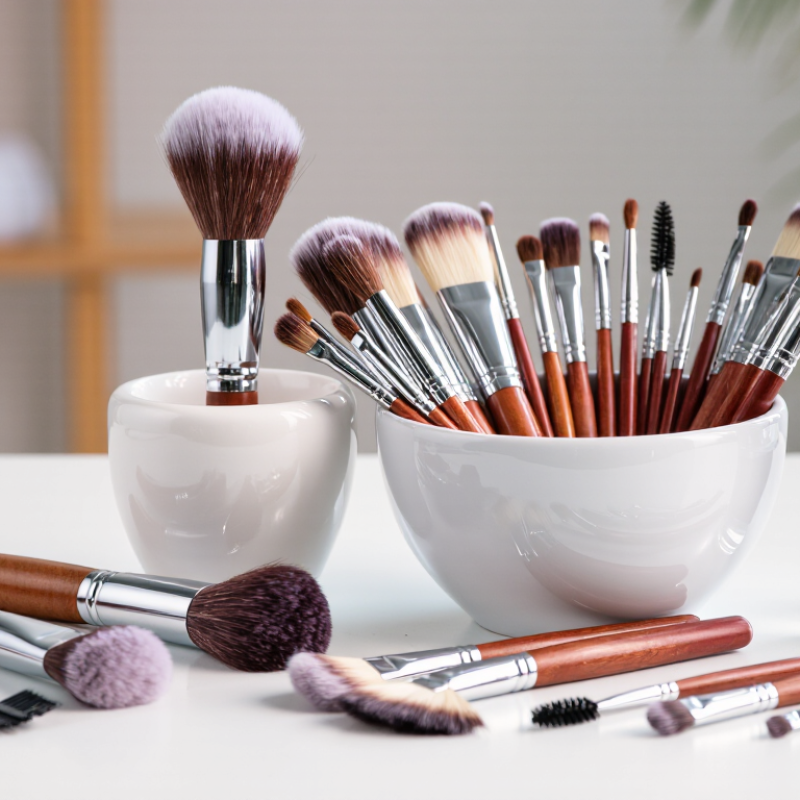
Define Brush Specifications: Fiber, Ferrule, Handle, and Set Composition
An OEM brush brief should define performance, not merely appearance. Specify fiber type, filament diameter, taper, softness, and intended formula. Synthetic fibers may work well with creams and liquids, but pickup and release vary by filament design. Test samples with your actual formula. A showroom swatch is not enough. Ask for documented shedding, wash, and shape-retention checks. Grand View Research valued the global cosmetics market at USD 374.18 billion in 2023. Its Cosmetics Market Size report forecast 5.5% annual growth through 2030. This is market context, not brush-specific evidence.
For the ferrule, state material, dimensions, finish, and attachment method. Check that fibers remain centered after repeated use. For the handle, set length, material, grip, weight, and balance; a glossy finish can look polished but feel slippery. Define each set brush by task, such as blending, lining, or applying powder. This helps prevent duplicate tools and unclear packaging. Still, a detailed specification cannot replace physical sampling.
Tip: Request a pilot set and test it after washing. Record fiber loss, handle comfort, and performance with each formula before approving production.
How to Choose the Best OEM Makeup Brush Supplier? - Define Brush Specifications: Fiber, Ferrule, Handle, and Set Composition
Use this specification matrix to compare supplier proposals and create a clear product brief. Targets are practical starting points; confirm final dimensions, materials, and tolerances with the supplier and through sample testing.
| Specification Area | What to Define | Practical Starting Specification | What to Verify with the Supplier |
|---|---|---|---|
| Fiber | Fiber type and intended use | Specify synthetic filament for liquid, cream, or powder products. Select fiber shape and stiffness according to the desired application and pickup. | Request fiber details, brush samples, and compatibility checks with the intended formula. Do not rely on a generic “synthetic hair” description alone. |
| Fiber | Filament diameter and taper | Define a diameter range and whether the filament should be tapered, straight, or a blend. Finer filaments can create a softer feel, while firmer filaments can provide more control. | Ask for the filament specification and compare softness, spring-back, shedding, and application performance across production samples. |
| Fiber | Shape, density, and trim | Specify the brush shape (such as flat, rounded, angled, or tapered), head dimensions, desired density, and trim profile. | Approve a dimensioned drawing or reference sample. Check that the head is symmetrical where required and that the trim has no uneven or visibly loose fibers. |
| Ferrule | Material and finish | Define ferrule material, finish, color, and surface treatment. Aluminum is commonly used; stainless steel may be specified when greater corrosion resistance is required. | Confirm the material grade, finish consistency, corrosion-resistance expectations, and any applicable restricted-substance requirements. |
| Ferrule | Shape, length, and fit | Set the ferrule profile, length, opening size, and fit to the brush head and handle. Record dimensions in millimeters on the product drawing. | Check alignment, sharp edges, dents, finish defects, and fit consistency on assembled samples. |
| Assembly | Bonding and pull strength | Specify the bonding method and an agreed pull-test requirement appropriate to the product and intended use. | Request the test method, sample size, acceptance criteria, and test records. Check for loose ferrules and fiber shedding after repeated handling. |
| Handle | Material and construction | Define handle material, such as wood or molded plastic, together with the required finish and construction. State whether the handle must be made from a specific material source. | Confirm material documentation, surface quality, moisture or deformation controls where relevant, and consistency between samples and production. |
| Handle | Length, diameter, and ergonomics | Provide handle length, grip diameter or profile, and weight target in the technical drawing. Test comfort and balance with the intended brush head. | Measure samples against the drawing and evaluate grip, balance, and usability with representative users. |
| Decoration | Color, printing, and coating | Specify color references, logo or text artwork, placement, coating type, and permitted visual variation. | Approve a signed color or artwork sample. Check print alignment, coating uniformity, legibility, and resistance to normal handling. |
| Set Composition | Brush count and functions | List each brush by function and quantity—for example, complexion, concealer, powder, blush, eyeshadow, and detail brushes. Avoid relying only on a total brush count. | Confirm the bill of materials, brush-by-brush dimensions, intended use, and that every listed item is included in the production set. |
| Set Composition | Case and included accessories | Define the case or pouch material, capacity, closure, internal layout, and any included accessories or care instructions. | Check that the packed brushes fit without crushing the heads and that the case protects them during normal storage and transport. |
| Quality Control | Inspection and acceptance criteria | Create written criteria for dimensions, appearance, assembly, fiber shedding, packaging, and set completeness before placing a production order. | Agree on inspection stages, sampling method, defect classifications, corrective-action process, and retention of an approved reference sample. |
| Packaging | Protection and labeling | Specify individual protection for brush heads, set packaging, carton quantity, and required product or shipping labels. | Review a packed sample and confirm that packaging prevents crushing, abrasion, and mix-ups during handling and shipment. |
Tip: Attach approved drawings, material descriptions, color references, and a signed sample to the purchase specification so that both parties assess production against the same requirements.
FAQS
Define fiber type, filament diameter, taper, softness, and intended formula. Add ferrule dimensions and attachment method. Specify handle length, material, grip, weight, and balance.
Fiber pickup and release can vary by filament design. Test with the intended cream, liquid, or powder. A showroom swatch is not enough.
Wash a pilot set and record fiber loss, shape retention, and handle comfort. Check whether fibers stay centered. Small flaws matter.
Request a current bill of materials for the handle, ferrule, coating, adhesive, and bristles. Include component suppliers and the reviewed Candidate List version. Paper can age.
It concerns a Candidate List substance’s concentration in an article, not simply the whole brush’s weight. Individual components may need review.
Check that the certificate is valid and covers the actual production site. Ask for audit history and procedures for trimming, bonding, coating, and inspection.
Agree on lot size, inspection level, AQL, and defect classes before production. For example, classify a loose ferrule as major and uneven color as minor.
Record shedding after repeated strokes, ferrule movement under gentle pulling, and visible glue near the bristle base. A passed sample can still contain defects.
No. Keep dated inspection records and corrective-action evidence, then examine the first production lot closely. A neat report cannot show how a brush feels.
Conclusion
Choosing an OEM makeup brush supplier starts with a clear product brief. Specify the brush fibers, ferrule construction, handle material and finish, and the contents of each set before comparing suppliers. Ask for material documentation and screen components against REACH’s 0.1% w/w SVHC disclosure threshold. These steps help align product performance, appearance, and documentation needs from the outset.
To decide how to choose an OEM makeup brush supplier, assess factory quality controls, including ISO 9001:2015 systems and ISO 2859-1 AQL sampling practices. Confirm that product records support traceability under EU General Product Safety Regulation 2023/988, and agree on how samples, production batches, and any issues will be documented. Finally, compare MOQ, lead time, tooling costs, and sample approval procedures. A supplier that communicates clearly across these areas can make production planning more predictable and help ensure the finished brushes meet the agreed specifications.
