2026 Best Makeup Brush Suppliers How Are They Manufactured?

Time:2026-10-01 Author:Madeline
0%

Choosing the best makeup brush suppliers in 2026 requires more than comparing prices or catalog photographs. Reliable buyers examine manufacturing experience, material quality, production capacity, and communication standards. A polished website is useful, but it does not prove consistent performance.

This guide explores how are makeup brushes manufactured, from selecting synthetic fibers or animal hair to shaping, washing, drying, and setting each brush head. It also follows ferrule forming, handle finishing, adhesive application, and final inspection. Small details matter. Uneven trimming can create scratchy edges. Weak bonding may cause shedding after several uses. A smooth handle can still hide poor internal assembly.

Experienced suppliers should explain their testing methods, sourcing records, factory controls, and sample procedures. Buyers should request physical samples, confirm fiber specifications, and review production tolerances before placing large orders. Certifications and audit reports can support trust, but they deserve careful verification. No supplier is perfect. Even a strong factory may face seasonal delays, material changes, or inconsistent batches. That reality should shape purchasing decisions.

The following overview compares supplier capabilities through a practical, evidence-based lens. It considers private-label support, customization, minimum order quantities, packaging, quality control, and delivery reliability. It also highlights questions that procurement teams often overlook. Manufacturing is technical, yet the final test is simple: does the brush feel balanced, apply product evenly, and remain dependable after repeated cleaning? That answer may reveal more than a sales presentation.
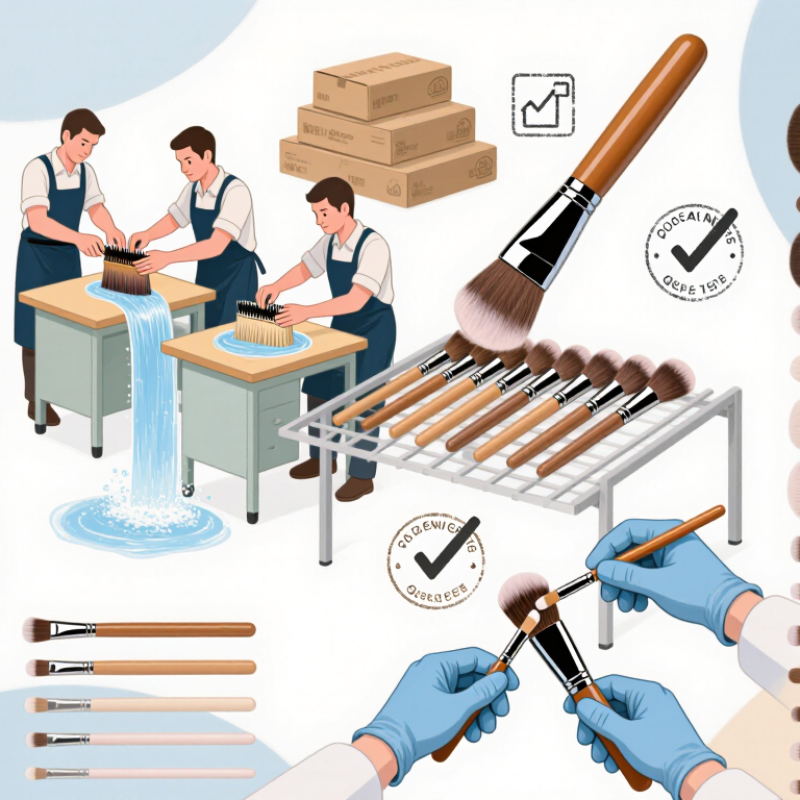
2026 Best Makeup Brush Suppliers How Are They Manufactured?

What Makes a Makeup Brush Supplier the Best Choice in 2026

What makes a makeup brush supplier the best choice in 2026? Reliable manufacturing is the starting point. A capable supplier should explain every production stage, from bristle selection to final inspection. Synthetic fibers need consistent softness, shape retention, and controlled shedding. Natural materials, where permitted, require clear sourcing records and responsible handling. The supplier should also provide material specifications, sample reports, and traceability documents. Transparency matters more than impressive promises.

Look closely at the factory process. Skilled workers should check ferrule alignment, adhesive coverage, handle finishing, and brush density. Small defects become obvious after repeated washing. A strong supplier uses batch testing, documented quality standards, and practical inspection tools.

Ask for samples from different production runs. One attractive sample proves very little. Communication is equally important. Clear replies about lead times, packaging, revisions, and minimum quantities reduce costly surprises.

The best supplier should adapt without losing consistency. It may support custom shapes, color matching, private packaging, and smaller trial orders. Manufacturing experience helps solve real problems, such as uneven tips or loose handles. Still, no supplier is perfect. A rushed approval can create defects, even with careful partners. Buyers should record test results and review failures honestly. Independent audits and updated compliance documents add confidence. Reasonable pricing matters, but the cheapest quote may hide weaker materials, slower corrections, or unstable production. "Ask better questions.

Key Materials Used in Professional Makeup Brush Manufacturing

Professional makeup brushes begin with careful fiber selection. Most modern suppliers use synthetic nylon or PBT filaments. These fibers resist moisture, keep their shape, and allow consistent tapering. Softness matters.

Manufacturers heat-set the filaments, trim their tips, and mix different lengths for controlled density. Natural hair can provide a distinctive touch, but its sourcing should be traceable and responsibly managed. Material claims need testing, not attractive language. A useful factory check includes checking fiber recovery after repeated bending and washing.

The ferrule often uses lightweight aluminum or stainless steel. Aluminum is easier to shape, while stainless steel offers stronger resistance to dents and corrosion. Inside, epoxy adhesive secures the fiber bundle. Poor curing can cause shedding, unpleasant odors, or handle separation. The handle may use lacquered wood, bamboo, recycled plastic, or other engineered materials. Each option changes grip, weight, moisture resistance, and production cost.

Quality teams commonly inspect ferrule alignment, handle balance, fiber shedding, and surface smoothness. They may also perform pull tests and repeated wash tests before approval. Small defects become obvious during daily professional use. No material is perfect. Synthetic fibers may feel less natural, while natural hair can vary more between batches. I have found that the best manufacturing decisions depend on the brush’s purpose, not on one fashionable material. A foundation brush needs stable density. An eye brush needs controlled softness and precise movement. Resistant coatings help, but they cannot replace careful assembly.

Step-by-Step Process of Making High-Quality Makeup Brushes

High-quality makeup brushes begin with controlled material selection, not attractive packaging. Grand View Research valued the global cosmetics market at about USD 343.37 billion in 2023, increasing pressure on suppliers to improve consistency and production speed. Manufacturers usually choose synthetic filaments or carefully graded natural hair, depending on softness, shape retention, and product compatibility. Each filament is tested for shedding, odor, flexibility, and surface smoothness.

The manufacturing process starts with filament cutting and blending. Workers then place the fibers into a metal ferrule or molding guide. A forming machine shapes the head, while controlled adhesive secures the bundle inside the handle. Handles may use wood, recycled materials, or injection-molded plastic. After curing, technicians trim and polish the brush head. They also check alignment under bright light. Small defects remain possible. Human inspection still catches uneven edges that automated cameras sometimes miss.

Tips: Ask suppliers for fiber specifications, ferrule thickness, adhesive testing, and shedding results. ISO 22716 guidance supports controlled cosmetic manufacturing practices, although it does not certify brush quality itself. Request sample brushes after washing, drying, and repeated bending. Test them on real skin. A brush can look precise but feel scratchy. That difference matters. Suppliers should record batch numbers and inspection results, creating traceable evidence instead of relying on promises.

How to Evaluate Makeup Brush Suppliers for Quality and Reliability

When evaluating makeup brush suppliers, inspect how each brush is made, not only how it looks in a catalog. Ask for details about bristle selection, shaping, ferrule attachment, handle finishing, and adhesive curing. Soft fibers should feel even, with no sharp ends or strong chemical odor. Check whether the supplier records material lots and production dates.

Request several samples from different batches. A single perfect sample can mislead. Wash each brush repeatedly, bend the ferrule gently, and check for shedding, loosened handles, color transfer, or uneven trimming. Small defects often appear after use. Ask for written inspection standards, sampling methods, and test records. Clear evidence is more valuable than confident promises.

Reliability also depends on communication and process control. Review lead-time history, minimum order quantities, packaging protection, and responses to quality complaints. A dependable supplier should explain what happens when a batch fails inspection. Look for traceable production records and reasonable quality agreements. Factory visits or independent audits can reveal storage problems, rushed assembly, or poor hygiene. I would still keep a second supplier under review, because forecasts change and production delays happen. Perfect assurance is unrealistic. Careful verification is not.

2026 Best Makeup Brush Suppliers: Quality & Reliability Benchmarks

Manufacturing checkpoints used to evaluate makeup brush suppliers

The chart presents practical acceptance benchmarks for supplier audits. Strong suppliers should demonstrate consistent bristle quality, secure ferrule bonding, durable handle finishing, low shedding after repeated use, reliable final inspection, and complete batch traceability. These indicators help buyers assess manufacturing control and long-term reliability without relying on brand reputation alone.

Top Supplier Categories for Different Makeup Brush Applications

2026 Best Makeup Brush Suppliers: How Are They Manufactured?

The best supplier depends on the makeup application, not only the brush’s appearance. Complexion brush suppliers usually produce dense, rounded heads for foundation, cream blush, and contour products. Their manufacturing process often combines synthetic fibers with aluminum ferrules and sealed wooden or recycled handles. Fiber length, taper, and packing density control coverage. A small change can create visible streaks.

Eye makeup brush suppliers focus on precision. They provide flat shader, angled liner, blending, and smudge designs with shorter fibers. These brushes require stable ferrule crimping, because loose heads can affect delicate eye work. Detail brush suppliers make ultra-small tips for inner corners, brows, and corrective application. Not every soft brush performs well. Excessive softness may reduce control.

Professional kit suppliers usually offer coordinated brush sets with consistent shapes and handle sizes. They must manage bulk production, repeated washing, packaging protection, and batch inspection. Sensitive-skin application suppliers may prioritize low-shedding synthetic fibers, smooth cuticles, and easy-clean surfaces. During sourcing, request fiber samples, wash-cycle tests, pull tests, and photos of the assembly line. I would also compare three batches, not one. A sample can look excellent while production varies. Supplier claims need evidence, especially for durability and hygiene. The manufacturing detail that seems minor may decide whether a brush feels precise after months of use.

2026 Best Makeup Brush Suppliers How Are They Manufactured? - Top Supplier Categories for Different Makeup Brush Applications

Supplier Category Primary Makeup Application Recommended Brush Shape Common Bristle Material Typical Ferrule and Handle Options Main Manufacturing Steps Key Quality Requirements Important Sourcing Consideration
Complexion Brush Suppliers Liquid foundation, cream foundation, tinted moisturizer and primer Flat-top, rounded kabuki, stippling or densely packed dome Soft synthetic filaments, commonly nylon or polyester-based fibers Aluminum or brass ferrule; lacquered wood, recycled plastic or molded plastic handle Fiber selection, precision cutting or tapered-fiber forming, bundle assembly, adhesive setting, ferrule pressing, handle fitting and inspection Even product distribution, low streaking, secure glue bond, controlled density and smooth fiber tips Request testing with both liquid and cream formulas because absorbency and stiffness can affect coverage
Powder Brush Suppliers Loose powder, pressed powder, setting powder and finishing powder Large round, full dome, tapered face or soft fan Synthetic fibers or natural animal hair, depending on the required finish and sourcing policy Lightweight aluminum ferrule with wood or molded polymer handle Fiber sorting, blending, shaping, bundle tying, ferrule assembly, adhesive curing, handle finishing and wash testing Softness, powder pickup, controlled release, shape retention and minimal shedding after repeated washing Confirm whether the product is animal-free, since fiber origin affects labeling and market eligibility
Blush and Bronzer Brush Suppliers Powder blush, bronzer, contour powder and highlighter Angled cheek, tapered round, small dome or fan Soft-to-medium-density synthetic fibers or selected natural hair Anodized aluminum, plated aluminum or brass ferrule; balanced wood or polymer handle Profile design, fiber cutting, thermal or mechanical shaping, knot insertion, ferrule crimping and final visual inspection Precise edge control, blendability, moderate pickup and consistent angle across production lots The brush head should be evaluated on different face sizes to verify usable contour placement
Eye Shadow Brush Suppliers Powder eye shadow, shimmer shadow and transition shades Flat shader, packing brush, pencil, tapered crease or blending dome Synthetic fibers for uniformity and animal-free positioning; natural hair may be used for certain powder textures Narrow aluminum ferrule and short-to-medium wood or molded plastic handle Fine fiber grading, head-size calibration, shaping, adhesive setting, ferrule assembly and dimensional inspection Controlled width, soft eye-area contact, pigment pickup, precise placement and stable profile Specify separate density standards for packing, blending and crease brushes rather than using one universal specification
Eyeliner and Brow Brush Suppliers Gel eyeliner, liquid liner, brow pomade, brow powder and detail work Angled, ultra-fine pointed, flat definer or precision liner Firm synthetic filaments with fine, resilient tips Slim ferrule with a narrow handle for controlled hand movement Microfiber selection, tip alignment, precision trimming, bundle fixation, ferrule bonding and tip-shape inspection Sharp tip retention, controlled flexibility, clean line formation and resistance to product buildup Test with waterproof and long-wear formulas because dried product can stress the fiber bond during cleaning
Lip Brush Suppliers Lipstick, lip gloss, lip stain, concealer detail work and lip contouring Flat, square, tapered or retractable lip brush Firm, smooth synthetic fibers suitable for cream and wax-based formulas Small ferrule with wood, molded polymer or retractable metal casing Fiber alignment, flat-profile forming, adhesive setting, ferrule assembly, handle finishing and closure-function testing for retractable designs Clean edges, controlled flexibility, low product retention and easy sanitation For professional use, prioritize protective caps or retractable construction to reduce contamination risk
Multifunctional and Travel Brush Suppliers Portable face and eye makeup kits, touch-ups and compact cosmetics Dual-ended, retractable, foldable or multi-use rounded head Durable synthetic fibers selected for repeated handling and washing Compact aluminum, stainless steel or molded polymer components Component molding or machining, fiber assembly, hinge or retractable mechanism installation, surface finishing and function testing Compactness, mechanism durability, hygienic storage, secure closure and resistance to deformation Check packed dimensions, opening cycles and compatibility with the intended cosmetic compact or pouch
Professional and Custom-Set Suppliers Complete makeup artist kits covering complexion, powder, eyes, brows and lips Application-specific assortment with standardized handle and ferrule dimensions Usually synthetic fibers for consistent production and easier animal-free positioning Coordinated metal ferrules and custom-finished wood, recycled plastic or molded polymer handles Design approval, prototype sampling, material verification, fiber forming, assembly, logo-free surface finishing, batch inspection and packaging Consistency between brush types, wash durability, ergonomic balance, handle strength and repeatable specifications Use approved samples and written tolerances for head length, diameter, weight, color and shedding before bulk production

Manufacturing note: Most makeup brushes are produced by selecting and forming fibers, assembling the bristle bundle, securing it with adhesive, fitting and crimping the ferrule, attaching the handle, then completing visual, dimensional, shedding and wash-resistance inspections. Exact materials and specifications vary by application and supplier capability.

FAQS

Which fibers are commonly used in professional makeup brushes?

Synthetic nylon and PBT filaments are widely used. They resist moisture and keep their shape. Natural hair can feel distinctive, but batch consistency may vary. Material claims should be tested.

How should brush fibers be tested before production?

Test softness, flexibility, odor, shedding, and surface smoothness. Bend and wash the fibers repeatedly. Check whether they recover their original shape. One attractive sample proves little.

What materials are suitable for brush ferrules?

Aluminum is lightweight and easy to shape. Stainless steel better resists dents and corrosion. The ferrule must stay aligned during use. Small movement can reduce application control.

Why is adhesive curing important?

Adhesive secures the fiber bundle inside the ferrule and handle. Poor curing may cause shedding, odor, or handle separation. Inspect cured samples before approval. A strong-looking joint can still fail later.

Which handle materials can manufacturers use?

Common options include lacquered wood, bamboo, recycled plastic, and engineered materials. Each changes grip, weight, moisture resistance, and cost. A wet workroom exposes weak finishes quickly.

How are high-quality brushes manufactured?

Workers cut and blend selected filaments. They place fibers into a ferrule or forming guide. Machines shape the head, and controlled adhesive secures the bundle. Technicians then trim, polish, and inspect each brush.

What quality checks should buyers request?

Request pull tests, repeated wash tests, shedding results, fiber specifications, and ferrule measurements. Check alignment under bright light. Test samples on real skin. Looks can mislead.

How do brush designs differ by application?

Complexion brushes usually need dense, rounded heads for even coverage. Eye brushes need shorter fibers and precise movement. Detail brushes require very small, controlled tips. Excessive softness may reduce control.

How can buyers evaluate supplier consistency?

Compare samples from at least three production batches. Review batch numbers and inspection records. Ask for assembly-line photographs and wash-cycle evidence. I would not trust one sample alone.

Is one material always the best choice?

No material is perfect. Synthetic fibers may feel less natural, while natural hair can vary more. The brush’s purpose should guide selection. This judgment can still be imperfect.

Conclusion

Choosing the best makeup brush supplier in 2026 requires more than comparing prices. Reliable suppliers combine consistent product quality, responsible sourcing, modern manufacturing capabilities, and clear communication. Professional brushes typically use materials such as synthetic fibers, natural hair alternatives, aluminum or other durable ferrules, and carefully selected wood or recycled handles. Understanding how are makeup brushes manufactured helps buyers evaluate whether a supplier controls each stage effectively, from fiber preparation and shaping to ferrule attachment, handle assembly, trimming, cleaning, and final inspection.

A dependable manufacturing process should deliver soft, resilient bristles, balanced handles, secure construction, hygienic packaging, and consistent performance across large orders. When evaluating suppliers, buyers should review material specifications, quality-control procedures, sample approval systems, production capacity, lead times, customization options, and after-sales support. Supplier categories may include specialists in foundation and concealer brushes, eye-detail tools, powder and blush brushes, professional kits, or sustainable everyday collections. The strongest choice is a supplier whose expertise matches the intended application while maintaining reliable standards and transparent production practices.

Madeline

Madeline

Madeline is a dedicated marketing professional with a wealth of expertise in our company's core offerings. With a keen understanding of the industry, she brings a unique perspective to her role, consistently delivering high-quality content that highlights the superior aspects of our products. As......