When people ask, can dirty makeup brushes cause acne, the honest answer is yes, they can contribute to breakouts. Brushes collect sebum, foundation residue, sweat, dust, and bacteria between washes. Each swipe can move that mixture across pores, irritated spots, or small cuts. Not every blemish comes from a brush. Skin type, hormones, cosmetics, and cleansing habits also matter. Still, the brush is an overlooked contact surface.
Board-certified dermatologist Dr. Sejal Shah has warned, “Makeup brushes can harbor bacteria, oil, and dead skin cells.” That observation gives this topic medical weight, but it does not prove that every dirty brush causes acne. In real routines, a damp brush may smell sour, feel stiff, or leave a thin film on the cheek. Those details matter more than glossy supplier claims. Brush design matters too. Dense synthetic fibers can trap cream products, while looser fibers may dry faster. A practical supplier comparison should examine fiber density, handle safety, ferrule quality, packaging, and cleaning instructions. Reliable manufacturers should explain material testing and hygiene controls.
This guide reviews China’s top ten makeup brush suppliers through a skin-conscious lens. It considers whether their brushes are easy to wash, dry, inspect, and replace. Supplier reputation matters, but user maintenance remains decisive. Wash brushes regularly. Let them dry fully. Do not share them during active breakouts. That advice sounds simple, yet many routines fail here. In everyday use, attractive brush sets can become neglected after only a few weeks. That uncomfortable gap deserves attention. Clean tools cannot guarantee clear skin, but they can reduce one avoidable source of irritation. That is the point worth testing.
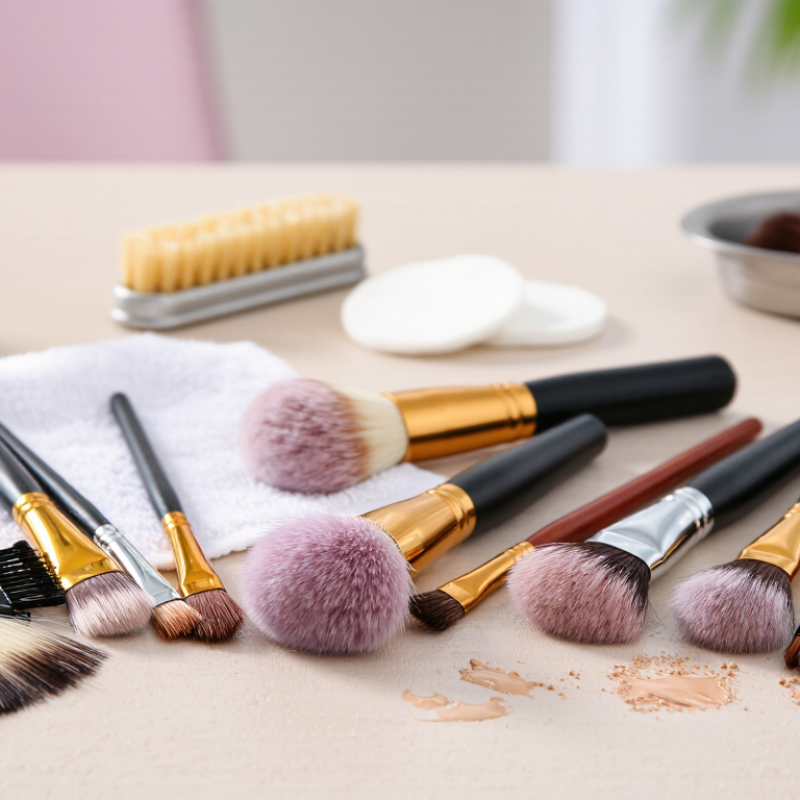
Dirty brushes can contribute to acne by transferring oil, dead skin, makeup residue, and bacteria onto the face. Each sweep may press this buildup into pores, especially around the cheeks, chin, and hairline. It can also irritate sensitive skin and worsen existing blemishes. However, brushes are not the only cause. Hormones, skincare products, stress, and genetics may also play important roles.
From practical skincare experience, washing brushes regularly makes a noticeable difference. Use lukewarm water and a gentle cleanser, then rinse until the water runs clear. Squeeze out moisture with a clean towel and dry brushes horizontally. Do not store damp tools in closed containers. Dermatology guidance commonly supports regular cleaning, but the ideal schedule depends on use and skin type. Brushes used with liquid products may need more frequent washing. I once ignored this detail and noticed more clogged pores than expected.
Tips: Clean frequently used brushes weekly, or more often for oily skin. Avoid sharing brushes. Replace tools when bristles become rough, discolored, or difficult to clean. Wash your hands before applying makeup, too. Small habits matter. If acne persists, painful lesions develop, or irritation spreads, consult a qualified dermatologist rather than blaming brushes alone.
China Top 10 Makeup Brush Suppliers: Can Dirty Brushes Cause Acne?
Dirty makeup brushes can transfer bacteria, oil, dead skin, and old cosmetics onto the face. Bristles hold more residue than they appear to. Cream foundation and concealer create a damp, sticky layer where microbes can multiply. Oil from the skin then joins the buildup. Not pleasant.
This does not mean every blemish comes from a brush. Acne also involves hormones, genetics, skincare products, and friction. However, contaminated bristles may irritate sensitive skin or spread pore-clogging residue. A dermatology-informed cleaning routine can reduce that risk. Wash brushes used with liquid products more frequently, ideally after several uses. Powder brushes still need regular cleaning, especially when they touch oily skin.
I used to clean brushes only when they looked dirty. That was a mistake. Appearance is not a hygiene test. Use lukewarm water and a gentle cleanser, keeping water away from the ferrule when possible. Rinse until the water runs clear, reshape the bristles, and dry brushes horizontally in a ventilated area. Never store them while damp. Replace brushes with shedding, cracked, or permanently stiff bristles. Shared brushes deserve extra caution, even during professional makeup work. For suppliers, consistent bristle quality and easy-clean construction matter, but user maintenance remains essential.
Unclean makeup brushes can contribute to several skin problems, but they are not the proven cause of every breakout. The American Academy of Dermatology Association recommends washing makeup brushes every 7 to 10 days. Oil, dead skin cells, cosmetic residue, and microorganisms can collect between the bristles. This buildup may clog pores or worsen acne-prone skin. Small details matter. A damp brush inside a closed bag creates a warm, poorly ventilated space.
Acne is only one concern. Repeated contact with contaminated tools may aggravate folliculitis, which can resemble small, itchy, or tender pimples around hair follicles. Irritant contact dermatitis may cause redness, burning, dryness, or peeling. Sensitive users may also experience allergic contact dermatitis from leftover pigments, fragrances, or preservatives. Around the eyes, poor brush hygiene can increase irritation and infection risks. These problems are easy to confuse.
A 2019 study in the Journal of Applied Microbiology reported bacterial contamination in approximately 70% to 90% of tested makeup products and applicators, depending on the sample. The finding is concerning, but it does not directly prove that every contaminated brush causes acne. Evidence is not perfectly tidy. Wash brushes weekly, rinse until the water runs clear, and dry them completely with the bristles extending beyond an edge. Replace permanently matted tools. “Clean-looking” is not always hygienic.
Dirty makeup brushes can contribute to clogged pores, but they do not automatically cause acne. They collect sebum, dead skin, pigment, and microbes from damp skin. A 2019 peer-reviewed study in the Journal of Applied Microbiology examined 467 used cosmetic products and tools. It reported microbial contamination in 70% to 90% of samples, with makeup sponges among the highest-risk items. Unsettling. Contamination does not prove acne will follow.
For liquid foundation and concealer brushes, wash every two or three uses. Use a gentle cleanser and lukewarm water. Rinse bristles downward. Dry them horizontally. Powder, blush, and highlighter brushes can usually be cleaned weekly. However, oily skin, active breakouts, or daily use justify more frequent washing. Eye brushes deserve weekly cleaning, and sooner after creamy products. Never store a damp brush in a closed cup.
In my experience, the handle stays clean while the bristles hold a gray, waxy film. That visual clue is easy to ignore. The American Academy of Dermatology recommends washing makeup brushes every seven to ten days. Still, one schedule cannot fit every routine. If a brush smells sour, sheds heavily, or irritates skin, replace it. I would not blame every breakout on tools; hormones, cosmetics, and skin-care products matter too. Track the pattern. Wash more carefully.
How to Choose Hygienic Brushes from China’s Top Suppliers
Dirty makeup brushes can transfer oil, dead skin, and microorganisms onto the face. A 2019 Aston University study found bacteria in 70%–90% of tested used cosmetics. It also reported that 93% of beauty sponges had never been washed. The American Academy of Dermatology recommends cleaning makeup brushes every seven to ten days. These figures do not prove that every brush causes acne, but they show why hygiene deserves attention.
When comparing Chinese suppliers, request documented cleaning procedures, sealed packaging, and lot traceability. Ask whether workers use gloves, hair covers, and controlled storage areas. ISO 22716 cosmetic GMP guidance can support better production discipline, although certification alone cannot guarantee a hygienic brush. Check synthetic fibers for shedding, uneven tips, strong odors, and visible residue. Request microbial test results from an independent laboratory when possible. Test samples after shipping, not only before production.
A practical inspection should include the handle, ferrule, adhesive, and bristle base. Moisture trapped inside the ferrule may create problems later. I would not trust a glossy certificate without recent audit records. That is an easy mistake. Suppliers should explain cleaning frequency, warehouse humidity, packaging materials, and corrective actions. Buyers can also ask for random pre-shipment samples and retain them for comparison. Hygienic design matters, but user cleaning remains essential. Even a well-made brush becomes questionable after weeks of product buildup.
Dirty makeup brushes do not automatically cause acne, but accumulated oil, makeup residue, dead skin cells and microorganisms can contribute to clogged pores, skin irritation or folliculitis. The following supplier-evaluation matrix focuses on verifiable hygiene, material and quality-control requirements without displaying company or brand names.
| No. | Evaluation Dimension | Evidence-Based Requirement | Recommended Verification | Hygiene Risk if Neglected | Priority | Buyer Benchmark |
|---|---|---|---|---|---|---|
| 1 | Manufacturing Hygiene System | The supplier should operate documented hygiene, cleaning, personnel-control and traceability procedures. ISO 22716 is a recognized guideline for Good Manufacturing Practices in cosmetics. | Request the current GMP certificate or audit report, production-area photographs, cleaning records and batch-traceability samples. | Higher probability of environmental contamination and inconsistent batch quality. | High | Documented GMP procedures with recent audit evidence. |
| 2 | Microbiological Control | Brushes are not automatically sterile. Any microbiological limits must be defined according to the intended use, product-contact risk and applicable market requirements. | Ask for a microbiological test plan and recent third-party reports covering total aerobic microbial count and yeast and mold testing where applicable. | Microbial growth may contribute to irritation or follicle-related skin problems. | High | Lot-based testing plan with laboratory methods and acceptance criteria. |
| 3 | Fiber Material Safety | Common brush fibers include synthetic nylon or PBT and animal hair. Materials should be identified accurately and evaluated for skin-contact safety, shedding and odor. | Review the material specification, supplier declaration, allergen information where relevant and incoming-material inspection records. | Unidentified materials may create avoidable irritation, odor or allergic-reaction concerns. | High | Full material declaration and traceable raw-material records. |
| 4 | Heavy Metals and Chemical Restrictions | Paints, coatings, adhesives and metal ferrules should comply with the destination market’s chemical restrictions. EU REACH requirements may apply to products placed on the EU market. | Request applicable restricted-substance test reports for lead, cadmium, mercury and other substances required by the destination market. | Unsafe chemical exposure may cause irritation or long-term compliance failures. | High | Reports issued by an accredited or technically competent laboratory. |
| 5 | Handle and Ferrule Durability | Loose ferrules, cracked handles and degraded adhesive can trap makeup residue and moisture, making cleaning less effective. | Use pull-force, drop, twisting and repeated-washing tests. Inspect seams, joints, glue lines and surface cracks. | Crevices can retain residue and may accelerate microbial buildup. | High | No visible cracks, sharp edges, loose ferrules or exposed adhesive after testing. |
| 6 | Fiber Shedding and Shape Retention | Brush fibers should remain securely anchored and retain their shape after repeated dry and wet use. | Perform brushing cycles, washing cycles and visual shedding counts using a documented internal specification. | Loose fibers can irritate skin and may carry residue into pores. | Medium | Supplier-defined pass/fail limits supported by repeatable test records. |
| 7 | Packaging Cleanliness | Individual packaging should protect the brush from dust, handling contamination and moisture during storage and shipment. | Check sealed packaging, packaging-material specifications, carton cleanliness and warehouse handling procedures. | Clean brushes can become contaminated before reaching the consumer. | High | Sealed primary packaging and clean, dry, pest-controlled storage. |
| 8 | Washability and Drying Design | A hygienic brush should be easy to clean and able to dry thoroughly. Excess water should not remain trapped inside the ferrule or handle joint. | Conduct a standardized wash-and-dry trial using mild soap or brush cleanser; inspect odor, residue, drying time and structural changes. | Persistent moisture can support microbial multiplication and unpleasant odor. | High | No persistent residue or odor after repeated cleaning and complete drying. |
| 9 | Skin-Contact Performance | Fibers should feel smooth and should not have sharp, broken or abrasive ends. “Non-comedogenic” claims require substantiation and should not be assumed from the brush material alone. | Review sensory inspection records, fiber-end microscopy where available, irritation assessments and claim-support documentation. | Rough fibers may cause mechanical irritation and worsen existing skin sensitivity. | Medium | Consistent softness, no sharp ends and no unsupported acne-prevention claims. |
| 10 | Batch Traceability and Corrective Action | Each production lot should be traceable from raw materials through inspection, packaging and shipment. Nonconforming products should have documented corrective actions. | Request sample batch numbers, inspection reports, retention-sample procedures, complaint records and corrective-action documentation. | Quality problems may be difficult to isolate, recall or correct. | High | Traceable lot records retained according to the supplier’s documented procedure. |
Practical user guidance: clean brushes regularly, allow them to dry completely in a ventilated area, avoid sharing brushes during active breakouts, and replace brushes that remain odorous, visibly damaged or difficult to clean. Microbiological limits and chemical requirements vary by product construction and destination market; confirm the applicable regulations before purchase.
Yes, they can transfer oil, dead skin, makeup residue, and bacteria. Each sweep may press buildup into pores. Cheeks, the chin, and the hairline can be vulnerable. Brushes are not the only cause.
Cream foundation and concealer leave a damp, sticky layer. Skin oil joins that residue. Dead skin and old cosmetics may remain between the bristles. Bristles can look clean while holding buildup.
Clean frequently used brushes about once a week. Oily skin may require more frequent washing. Brushes used with liquid products need extra attention. After several uses may be reasonable.
Use lukewarm water and a gentle cleanser. Rinse until the water runs clear. Squeeze out moisture with a clean towel. Reshape the bristles carefully.
Dry them horizontally in a ventilated area. Keep water away from the ferrule when possible. Do not store damp brushes in closed containers. Damp storage encourages an unpleasant buildup.
Sharing can transfer oil, residue, and bacteria between users. Avoid sharing whenever possible. Extra caution matters during professional makeup application. Clean tools thoroughly between users.
Replace it when bristles become rough, discolored, cracked, or permanently stiff. Shedding bristles can make cleaning difficult. A damaged brush may irritate sensitive skin. Appearance alone is not a hygiene test.
Hormones, genetics, skincare products, stress, and friction may contribute. A dirty brush may only be one part of the problem. I once blamed brushes alone. That was too simple.
Seek qualified dermatology advice if acne persists or becomes painful. Spreading irritation also deserves attention. Do not keep changing brushes without examining other causes. Small habits help, but they are not a complete treatment.
Can dirty makeup brushes cause acne? Yes, unclean brushes can transfer accumulated oil, sweat, dead skin cells, makeup residue, and bacteria back onto the skin. Repeated use may clog pores and contribute to acne, blackheads, irritation, redness, or other skin problems, especially for people with oily or sensitive skin. Foundation, concealer, and cream-product brushes usually require more frequent cleaning because their bristles hold moisture and product buildup, while powder brushes may be cleaned slightly less often.
A hygienic brush routine should include regular washing, thorough rinsing, and complete air-drying in a clean, well-ventilated place. When evaluating products from China’s top makeup brush suppliers, buyers should look for soft, securely fixed bristles, durable handles, easy-to-clean materials, and packaging that protects brushes from dust and contamination. Choosing well-made brushes and maintaining them properly can help support cleaner application, reduce unnecessary skin exposure to buildup, and promote better everyday hygiene.
