Choosing a certified cosmetic brush supplier affects product safety, consistency, and customer trust. A brush may look soft in photographs, yet shed fibers after repeated washing. Its ferrule may loosen when exposed to moisture. These details matter during real-world use.
A practical supplier review should examine factory experience, material traceability, production controls, and independent testing. Ask, “what certifications should cosmetic brush suppliers have” before comparing prices. Relevant evidence may include ISO 9001 for quality management and ISO 22716 where cosmetic manufacturing practices apply. FSC certification can support responsibly sourced wooden handles, while material testing may address restricted substances and skin-contact safety. Requirements vary by market and product design.
Look closely at certificate numbers, issuing bodies, validity dates, and covered facilities. A certificate is useful evidence, not absolute proof. Request recent audit reports, batch records, inspection photos, and test results for bristles, adhesives, coatings, and packaging. Confirm that the documents match the actual supplier, not only a trading company.
Small tests reveal more than polished presentations. Wash sample brushes repeatedly. Bend the handles. Check shedding, odor, staining, and drying time. Compare samples from different production batches when possible. Even experienced buyers can overlook adhesive changes or subcontracted processes. That is a weakness worth acknowledging.
The strongest supplier choice combines verified certifications, transparent communication, stable production, and measurable sample performance. Price still matters, but unreliable quality can create returns, delays, and damaged brand credibility. An informed decision requires evidence, practical testing, and careful follow-up.
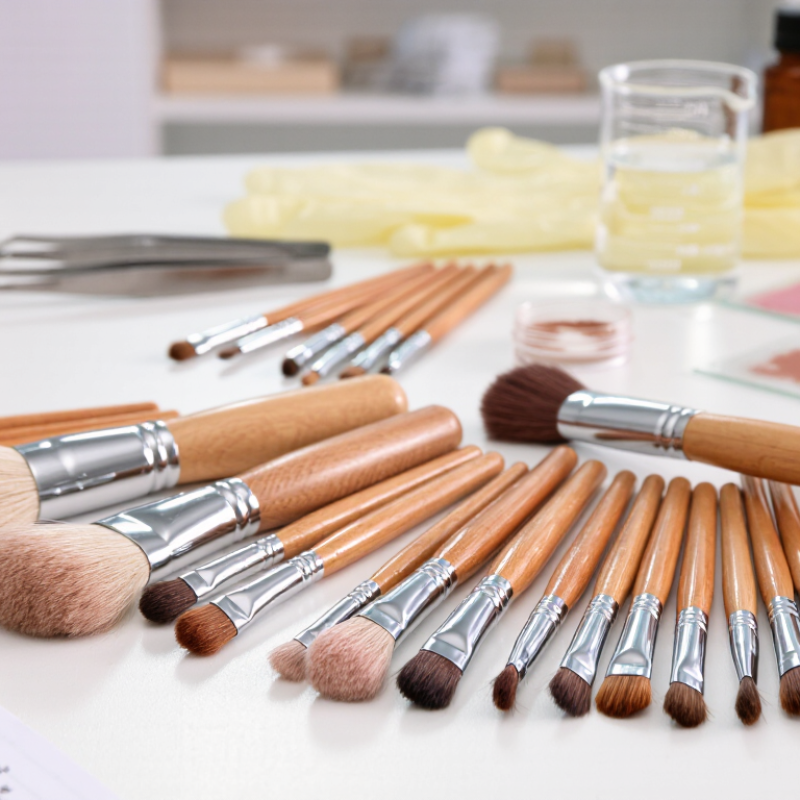
Choosing certified cosmetic brush suppliers begins with understanding what each certificate actually proves. ISO 22716 supports good manufacturing practices for cosmetic-related production, including hygiene, storage, traceability, and quality controls. ISO 9001 focuses on the supplier’s quality management system, not brush safety alone. The 2023 ISO Survey recorded more than 1.2 million ISO 9001 certificates worldwide, showing its wide use, but also its limits.
Certification is only one checkpoint. Ask for the current certificate, issuing body, scope, expiry date, and factory address. The scope should cover brush assembly or cosmetic accessories, not unrelated products. Request material specifications for synthetic fibers, natural hair, adhesives, coatings, and handles. For European sales, supporting documents should address applicable chemical restrictions under REACH and cosmetic product requirements under Regulation (EC) No 1223/2009. Wooden handles may also need legal timber sourcing evidence. Details matter.
A reliable supplier should provide batch records, inspection reports, and corrective-action history. I would test loose fibers, ferrule strength, odor, shedding, and surface roughness from production samples. A clean sample can still hide weak process control. That is easy to overlook. The 2023 EU Safety Gate report listed over 3,400 product alerts across consumer categories, reminding buyers that traceability remains practical protection. Certificates help, but they do not replace independent testing, factory visits, or honest questions about failed batches. I would keep written evidence for every approval decision.
Defining quality starts with the brush, not the certificate. McKinsey’s 2023 beauty report forecasts a global beauty market near $590 billion by 2028. That growth increases pressure on suppliers, but low prices should not replace verification. I examine bristle softness, shedding, odor, ferrule alignment, and handle stability. A good sample should survive repeated washing without losing shape. It should feel consistent in the hand.
Supplier requirements must be measurable. Request test records for pull strength, color transfer, microbial limits, and restricted substances. Ask for traceability from raw material to finished batch. ISO 9001 certification can support process control; the ISO Survey 2022 recorded 1,265,216 certified sites worldwide. Yet certification alone proves little. Confirm the certificate’s legal entity, factory address, scope, and expiry date. ISO 22716 concerns cosmetic manufacturing practices, not automatic brush certification. That distinction is often missed.
I also require pre-shipment inspection and retained samples. The supplier should explain corrective actions, not hide defects behind polished documents. In one practical check, a dense brush passed visual review but released fibers after ten wash cycles. The first result was misleading. Human skin contact demands cleaner thinking. Material declarations should identify animal hair, synthetic fibers, adhesives, coatings, and packaging components. Independent laboratory reports add credibility, especially when claims involve safety or restricted chemicals. Some requirements may still be incomplete. That is a reason to review them, not ignore them.
How to Choose Certified Cosmetic Brush Suppliers
Verifying supplier credentials should begin with the certificate, not the sales presentation. Request a current document showing the issuing organization, factory address, covered products, and expiration date. Check whether the certification applies to cosmetic brush production or only to another facility. The difference matters. A valid quality certificate can support trust, but it cannot replace direct assessment. Ask for recent audit summaries, corrective action records, and documented quality procedures. Reliable suppliers usually answer clearly, even when a finding needs improvement.
Manufacturing practices deserve close attention. Look for controlled material receiving, clean assembly areas, batch identification, and final inspection records. Brush fibers should be checked for shedding, odor, color consistency, and secure attachment. Handles also need inspection for cracks, sharp edges, and uneven coatings. Ask how workers prevent mixing materials between orders. Traceability should connect raw materials to finished cartons. Test it with one sample batch. If staff cannot follow its history, pause the evaluation. I have seen polished samples hide weak process control. That remains an uncomfortable but useful reminder. Factory visits can reveal practical details that documents miss, such as crowded storage or unlabeled containers. Suppliers should also explain complaint handling and recall procedures in plain language. Expertise is not shown by perfect answers. It is shown by consistent records, transparent limits, and measurable improvement.
This chart groups the 16 operational sections of ISO 22716:2007, covering clauses 3–18, into practical supplier-verification areas. When evaluating a cosmetic brush supplier, request objective evidence such as personnel training records, facility and equipment controls, material traceability, production records, quality testing, deviation handling, complaint procedures, change control, internal audits, and controlled documentation.
Source: ISO 22716:2007, Cosmetics — Good Manufacturing Practices (GMP) — Guidelines on Good Manufacturing Practices.
Choosing certified cosmetic brush suppliers requires more than checking a certificate. Material selection affects softness, durability, hygiene, and consumer perception. Synthetic fibers offer consistent shapes and easier batch control, while natural hair can provide a different powder pickup. However, natural materials may vary more between batches. The Global Cosmetics Industry report by Grand View Research valued the global cosmetics market at approximately USD 262 billion in 2022, showing why dependable tool quality matters across expanding product lines.
Customization should be tested, not simply promised. Ask for fiber diameter, ferrule composition, handle coatings, adhesive specifications, and wash-cycle results. A capable supplier should provide samples, inspection records, and traceability for each production lot. ISO 9001-based quality systems can support process control, while cosmetic GMP guidance, including ISO 22716 principles, may strengthen documentation practices. Certifications alone are not enough.
Production capability deserves equal attention. Check mold ownership, automated trimming, manual inspection, packaging capacity, and realistic minimum order quantities. According to Deloitte’s 2024 Global Powers of Retailing analysis, operational resilience remains important as companies manage supply uncertainty and changing demand. A supplier with flexible production can support smaller test launches before larger orders. That sounds safer.
I would not rely on a polished factory tour. Request defect-rate data, corrective-action reports, and independent material testing. Some suppliers may provide excellent prototypes but struggle with color consistency at scale. This is where careful comparison matters. Expect questions, evidence, and a few uncomfortable answers.
Choosing a certified cosmetic brush supplier requires more than viewing a polished catalog. Start with physical samples. Check bristle softness, shedding, odor, ferrule alignment, and handle balance. Wash each sample repeatedly, then inspect loose fibers and adhesive movement. Test dry and damp use. Small defects matter. Ask for samples from regular production, not only a carefully prepared showroom set. A perfect sample is not enough. This step reveals process discipline, though it can also expose your own unclear specifications.
Compliance documents should be specific, current, and traceable. Request the company’s quality certificates, material declarations, test reports, and applicable chemical-safety statements. Confirm the legal entity, production site, issue date, product scope, and testing laboratory. Documents copied from another product deserve questions. For wooden handles, review coating and origin information. For synthetic fibers, verify material composition and restricted-substance testing where required. Requirements differ by destination, so a supplier should explain limits without promising universal approval. Keep a document register. It sounds dull, but it prevents costly confusion.
Long-term support becomes visible after the order leaves the factory. Ask how the supplier records batches, manages approved samples, reports material changes, and handles corrective actions. Reliable teams provide inspection records and respond with evidence, not vague assurances. Set measurable standards for shedding, bonding, dimensions, packaging, and delivery tolerance. Schedule periodic reviews. Communication matters. Still, no supplier is flawless. A missed detail may happen, and your own inspection plan may be incomplete. Choose a partner willing to acknowledge problems, investigate root causes, and improve with you.
Check softness, shedding, odor, ferrule alignment, and handle stability. Wash it repeatedly. One visual check is insufficient.
Match the certificate’s legal entity, factory address, scope, and expiry date. Certification supports control, but does not prove brush quality.
Request pull-strength, color-transfer, microbial-limit, and restricted-substance records. Ask for traceability from raw material to finished batch.
Synthetic fibers usually offer consistent shapes and easier batch control. Natural hair may pick up powder differently, but batches can vary.
Confirm fiber diameter, ferrule composition, handle coating, adhesive, packaging, and wash-cycle performance. Promises are not evidence.
Review mold ownership, trimming methods, manual inspection, packaging capacity, and minimum order quantities. Test before scaling.
They create a physical reference before delivery. Compare shipment quality with the retained sample. Defects can hide behind polished documents.
A supplier may show excellent prototypes but inconsistent color at scale. Ask for defect rates and corrective actions. Some requirements may remain incomplete. That deserves review.
Use repeated washing and inspect shape, fibers, ferrule movement, and handle stability. A dense brush may still shed after ten cycles.
Record the missing information and request clarification. I may still overlook something. That is why independent testing and retained samples matter.
Choosing the right certified cosmetic brush supplier requires a careful review of quality standards, production practices, and long-term reliability. Begin by asking, “what certifications should cosmetic brush suppliers have,” and identify the documents relevant to product safety, material quality, manufacturing consistency, and ethical operations. Clearly define your requirements for brush performance, handle durability, bristle softness, hygiene, packaging, order volume, and delivery timelines before comparing potential suppliers.
Next, verify each supplier’s credentials, factory capabilities, quality control procedures, and experience with customized products. Evaluate the materials used for bristles, handles, ferrules, and packaging, while confirming whether the supplier can support design development, sampling, stable production, and consistent quality at scale. Request product samples and carefully review compliance documents, test reports, inspection records, and traceability information. A dependable supplier should communicate transparently, respond efficiently to quality concerns, and provide reliable after-sales support to help maintain product consistency over the long term.
