How to Start a Private Label Makeup Brush Business in 2026?

Time:2026-09-26 Author:Ethan
0%

Starting a brush brand can look simple: choose a logo, pick a set, and sell it online. The harder work happens before launch. You need to decide who the brushes serve, what they should feel like, and why customers would choose them over familiar brands. For anyone researching how to start a private label makeup brush business, those choices shape the product, supplier search, and launch budget.

Makeup artist and entrepreneur Bobbi Brown has said, “I believe all women are pretty without makeup—but with the right makeup can be pretty powerful.” That idea points to a useful standard: brushes should help people feel capable, not intimidated. Test samples on real routines. Notice how a powder brush picks up product, whether a ferrule feels secure, and if a handle slips in a damp hand. Small details matter.

This guide looks at the practical decisions behind a 2026 launch, from choosing a customer and comparing manufacturers to setting specifications, packaging, pricing, and quality checks. Ask suppliers about fiber type, minimum order quantities, sample revisions, and production timelines. Keep written records. A polished sample is not proof that every production unit will match it.

There are trade-offs. Lower unit costs may require larger orders, while custom details can add time and expense. I would not pretend there is one perfect formula; even careful planning leaves room for a disappointing sample. Build in time to inspect, revise, and test again. A thoughtful first collection beats a large one that has not earned trust.
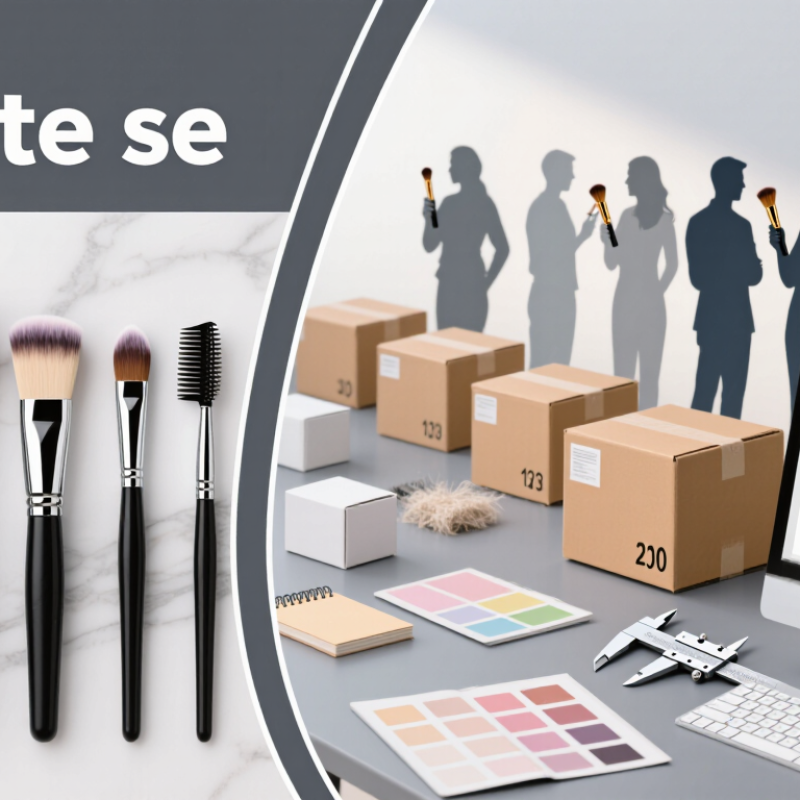
How to Start a Private Label Makeup Brush Business in 2026?

Define Your Private Label Makeup Brush Business Model and Target Market

Define Your Private Label Makeup Brush Business Model and Target Market

A private-label brush business can start with a focused kit, rather than a large catalogue. Choose whether you will sell directly online, supply makeup professionals, or serve independent retailers. Each model changes your packaging, order sizes, and customer support needs. A compact set might include a powder brush, blush brush, and two eye brushes. Keep the offer clear.

Grand View Research valued the global makeup market at USD 42.6 billion in 2023. Its report projected 5.4% annual growth from 2024 to 2030. This measures the wider makeup category, not brush demand specifically. That distinction matters. Treat the figure as context, not proof that any brush set will sell.

Define a buyer in practical terms: a freelance artist replacing worn tools, or a beginner wanting a simple daily set. Ask potential customers what they use, what they dislike, and how much they expect to pay. Then test a small sample range for grip, shedding, cleaning time, and pouch fit. Not every assumption will hold. I would avoid launching several handle colors before confirming demand; that detail can feel exciting, but it may tie up cash. Track landed cost, packaging, and likely selling price before choosing a market position. A low price alone is not a strategy.

Define Your Private Label Makeup Brush Business Model and Target Market

Compare typical synthetic and animal-hair bristle positioning when choosing a product direction for your private label line.

How to use this: Synthetic bristles can support a vegan-focused positioning when all other brush components meet the relevant requirements. Animal-hair bristles may appeal to customers seeking traditional powder brushes. This chart describes typical bristle materials only—not market size or sales performance. Verify handles, adhesives, supplier documentation, and applicable labeling claims before making product claims.

Research Brush Types, Materials, Suppliers, and Manufacturing Options

Start with a focused brush range: a powder brush, a foundation brush, a concealer brush, and a small eye brush. Each serves a clear task and gives you specific tests for shape, density, and comfort. McKinsey’s 2023 beauty-market analysis projected the global beauty market could reach $580 billion by 2027, but that broad forecast is not a brush-sales guarantee. Your customer research still matters. Ask makeup users which brush they reach for daily, then test prototypes with real products and routines.

Material choices affect feel, cleaning, and cost. Synthetic fibers, often made from PBT, suit liquid and cream products and offer consistent shapes; natural hair may appeal to some buyers but requires closer checks on sourcing and care. Compare fiber softness, shedding, ferrule security, and handle balance. A brush should not feel top-heavy in the hand. Request samples from several suppliers, and wash each repeatedly before approving production. Small details show up fast.

Manufacturing can be turnkey, with one supplier handling components and assembly, or split across specialist vendors. Turnkey sourcing may simplify communication; separate sourcing can offer more control but adds coordination. Ask for material specifications, sample timelines, minimum order quantities, and documented quality checks. Do not rely on a polished sample alone. A first batch can still vary, and I would leave room in the schedule for corrections. That part is easy to underestimate.

How to Start a Private Label Makeup Brush Business in 2026? - Research Brush Types, Materials, Suppliers, and Manufacturing Options

Research Area Options to Consider Practical Details What to Verify Before Ordering
Foundation brush Flat, rounded, or dense buffing head; commonly synthetic fibers Designed for liquid or cream foundation; head shape and density affect coverage and finish. Test streaking, softness, fiber shedding, and performance with the intended formula.
Powder brush Large, fluffy round or tapered head; synthetic or natural hair A looser head generally picks up and distributes loose or pressed powder more lightly than a dense head. Assess pickup, release, shape retention, and cleaning performance.
Blush and contour brush Angled, tapered, or dome-shaped head Shape, size, and fiber density influence placement and blending; define the intended use in the product brief. Compare samples on different face areas and check that the head keeps its shape after washing.
Eye brushes Blending, shader, angled liner, and pencil shapes Smaller heads support more controlled application; softness and firmness should match the intended technique. Check tip precision, edge consistency, and comfort on the delicate eye area.
Fiber materials Synthetic filaments, often nylon or PBT; natural animal hair is another category Synthetic fibers are commonly used with liquid and cream products and can support a vegan positioning. Natural hair may be selected for powder application, but has animal-origin and sourcing considerations. Request material descriptions and origin documentation. Avoid vegan or cruelty-free claims unless substantiated for the full product and supply chain.
Ferrule and handle Metal ferrule, commonly aluminum; handle options include wood, plastic, or metal The ferrule secures the fiber bundle to the handle. Handle material affects weight, finish, durability, and packaging requirements. Inspect crimping, alignment, surface finish, handle durability, and any coating or material declarations.
Private-label model Stock brush designs with customization such as logo, color, or packaging Often a simpler way to test demand than developing a fully custom brush; available choices depend on the supplier. Confirm available designs, customization limits, minimum order quantity, lead time, and sample charges directly with each supplier.
OEM manufacturing Production to buyer-provided specifications or design Can provide greater control over dimensions, materials, color, and finish, but requires clear specifications and approved samples. Document drawings, tolerances, materials, color references, inspection criteria, and ownership of custom tooling where applicable.
ODM manufacturing Supplier-developed designs that can be adapted for a buyer May reduce design work, while customization and exclusivity vary by agreement. Clarify design rights, exclusivity, customization scope, production capacity, and quality responsibilities in writing.
Supplier evaluation Compare manufacturers and trading suppliers using the same product brief Evaluate communication, technical capability, production controls, traceability, and ability to meet the target market's requirements. Request business and facility details, material records, sample policies, inspection procedures, and relevant test documentation.
Sample and quality checks Pre-production sample, approved reference sample, and production inspection Useful checks include fiber shedding, ferrule security, odor, finish consistency, dimensions, and performance after cleaning. Agree on measurable acceptance criteria and keep a signed or otherwise identifiable approved sample for comparison.
Packaging and market readiness Individual sleeves, sets, boxes, or protective inserts Packaging should protect brush heads in transit and provide accurate product, care, and business information for the sales market. Check applicable consumer-product, packaging, labeling, and chemical requirements in each destination market; requirements vary by jurisdiction.

Develop Your Brush Designs, Branding, Packaging, and Product Specifications

A private-label brush line should begin with a clear use case, not a large catalog. Choose a focused set: a powder brush, an angled cheek brush, and a detail brush. Specify fiber type, head shape, handle length, ferrule material, and target softness for each item. A 16-centimeter handle may feel balanced at home, while a shorter one suits travel kits. Test samples with loose and pressed powder. Record shedding, streaking, cleaning time, and grip with damp hands. Small tests reveal more than attractive product photos.

Choose a name, color palette, and visual style that fit your intended buyer and price point. Keep product claims measurable: describe fiber feel or intended use instead of promising flawless results. Ask your supplier for material details and sample revisions in writing. Save approved specifications and dated photos. Packaging should protect brush heads with a fitted insert. Add clear care instructions and test whether the carton withstands routine handling. Avoid oversized boxes; shipping volume can quietly reduce margins. A first sample may look polished yet feel awkward after washing. Revise it.

Tips: Request two sample rounds if your schedule allows. Compare brushes after several washes, not just on arrival. This can reveal loose fibers or weak adhesive before production.

Plan Startup Costs, Pricing, Compliance, and Quality Control

A private-label brush launch needs a cost sheet before a mood board. McKinsey’s 2023 State of Beauty report estimated the global beauty market could reach $580 billion by 2027, growing about 6% annually. That signals opportunity, not guaranteed demand for another brush set. Budget for prototypes, packaging, freight, duties, product photography, marketplace fees, and replacement stock. Keep a cash reserve for delays. Your first forecast will probably be wrong.

Price from landed cost, not factory price alone. For example, a brush set costing $4 after freight and packaging, sold for $18, has about 78% gross margin before payment, platform, advertising, and return costs. Check the actual fees in each sales channel. Compare the final price with similar sets and test customer response before placing a large order. A neat spreadsheet helps, but it cannot predict every slow month.

Set written acceptance standards with the supplier. Check bristle shedding after repeated strokes, ferrule strength with a pull test, handle cracks, odor, and packaging damage. Inspect samples from each production batch, and keep dated records and photos. Requirements vary by market, so confirm applicable product labeling, importer details, and safety obligations before sale. Avoid unsupported “antibacterial” or performance claims. One awkward detail: a brush can look perfect in a sample and still fail after washing. Test it wet, too.

Build Sales Channels and Launch Your Makeup Brush Brand in 2026

Launching a makeup brush brand in 2026 means choosing sales channels before ordering a large inventory. McKinsey’s 2023 beauty analysis projected the global beauty market could reach $580 billion by 2027, growing about 6% annually. That growth is encouraging, but it does not guarantee demand for another brush set. Start with a narrow range: perhaps a soft powder brush, a dense foundation brush, and a washable travel pouch. Test product descriptions and prices through a simple online store before committing to thousands of units.

Use direct online sales to learn which brush shapes, materials, and price points attract customers. Add a major marketplace only when product photos, packaging, stock levels, and customer support are ready. Circana reported that U.S. beauty sales exceeded $100 billion in 2024, up 7% year over year. The wider market is active. Your own conversion rate still matters more. Keep it measurable. Track product-page visits, add-to-cart rates, refunds, and repeat purchases by channel.

For offline reach, offer sample kits to independent makeup artists and beauty schools, then collect specific feedback on grip, shedding, and cleaning time. Small wholesale orders can reveal whether professionals reorder, not just praise the samples. I would avoid spreading the launch budget across too many channels; I have seen attractive packaging consume money that should have funded product testing. Review performance monthly, and revise the range when real customer behavior disagrees with your first idea.

FAQS

Which brushes should a small first collection include?

Start with a powder brush, foundation brush, concealer brush, and small eye brush. Each gives you a clear use to test.

How can I choose suitable brush fibers?

Synthetic fibers often work well with liquid and cream products. Compare softness, shedding, and shape after washing. Feel matters.

What should I check in a brush sample?

Check whether the ferrule stays secure and the handle feels balanced. A top-heavy brush can feel awkward during longer routines. Wash it repeatedly.

Should one supplier handle the whole order?

A single supplier may simplify communication. Separate specialists can give you more control, but require extra coordination. That trade-off is easy to underestimate.

What should I ask suppliers before production?

Request material specifications, sample timelines, minimum order quantities, and documented quality checks. Leave time for corrections; the first batch may vary.

How can I test demand before ordering many brushes?

Try a small online store with a few brush types. Track page visits, cart additions, refunds, and repeat purchases. Numbers can surprise you.

When should I add more sales channels?

Add a marketplace or wholesale channel when photos, stock, packaging, and customer support are ready. Don’t spread the budget too thin.

How can makeup artists and beauty schools help?

Offer sample kits and ask about grip, shedding, and cleaning time. Small wholesale orders can reveal whether users reorder. Praise alone is not proof.

Conclusion

Starting a private label makeup brush business in 2026 begins with a clear business model and a well-defined target market. Decide whether to sell individual brushes, curated sets, or a broader collection, then identify the customers you want to serve and the qualities they value, such as softness, durability, ease of use, or an accessible price. Research brush shapes, bristle and handle materials, suppliers, and manufacturing options to find a combination that suits your product vision and budget.

Next, develop distinctive brush designs, brand identity, packaging, and detailed product specifications. Estimate startup costs, set prices that account for production and operating expenses, and establish quality checks before placing orders. Prepare product information and customer support for your chosen sales channels, such as an online store or retail partnerships. A practical plan for how to start a private label makeup brush business brings these decisions together, helping you launch with a consistent product range, clear messaging, and a process for learning from customer feedback.

Ethan

Ethan

Ethan is a seasoned marketing professional with a deep expertise in our company's innovative product line. With a passion for sharing knowledge and insights, he takes the lead in regularly updating our corporate blog, where he explores industry trends, product features, and effective marketing......